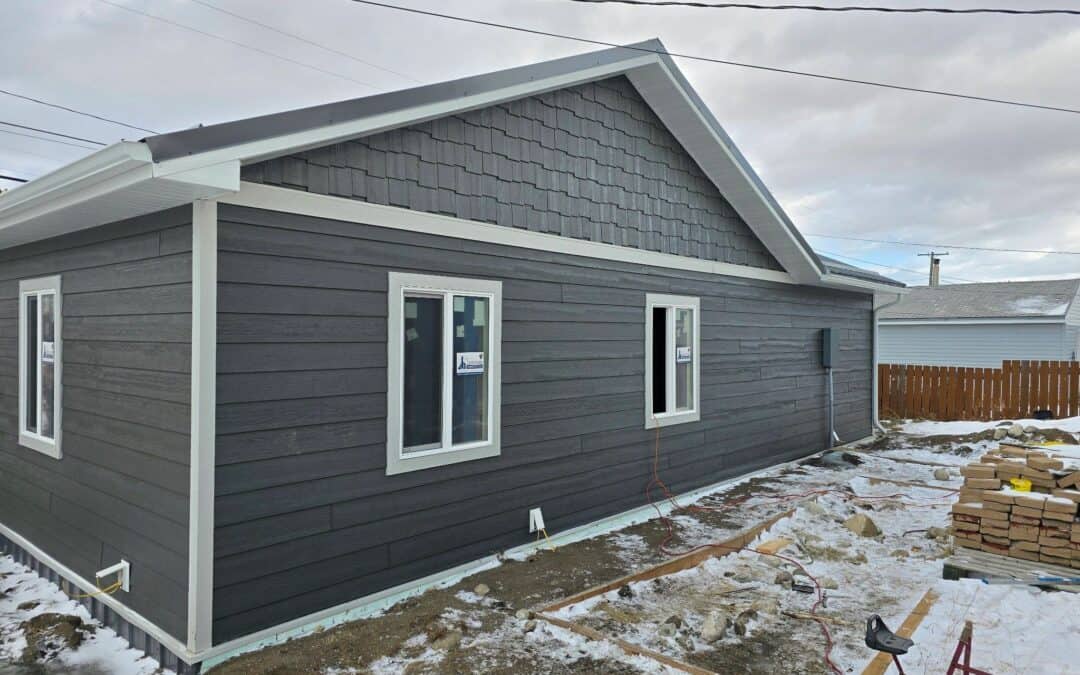
Siding your home in Montana requires careful consideration due to the state’s harsh winters, temperature fluctuations, and moisture exposure. Here are five key things to know before siding your home in Montana:
1. Choose the Right Material for the Climate
Montana’s extreme weather requires durable siding materials that can withstand:
✔ Cold temperatures & snow loads
✔ High winds in open areas
✔ Moisture from rain & snowmelt
✔ UV exposure in sunny months
Best Options:
- Fiber Cement (Hardie Board) – Extremely durable, fire-resistant, and low maintenance.
- Engineered Wood (LP SmartSide) – Looks like wood but resists moisture, pests, and rot.
- Vinyl Siding – Affordable, low-maintenance, but may crack in extreme cold.
- Steel or Metal Siding – Long-lasting and resistant to Montana’s elements.
2. Proper Insulation Matters
✔ Add house wrap or foam insulation underneath the siding to improve energy efficiency.
✔ Montana winters can be brutal, so insulated siding is a great option to reduce heating costs.
3. Wind & Snow Resistance Are Critical
✔ If your home is in a high-wind area, choose siding rated for strong winds and install it securely.
✔ Lap siding vs. vertical siding – Lap siding sheds water more effectively.
✔ Snowmelt runoff – Proper flashing and moisture barriers are essential to prevent water damage.
4. Understand Maintenance Needs
Different siding materials require different levels of upkeep:
✔ Vinyl & metal siding → Low maintenance, just occasional cleaning.
✔ Fiber cement & engineered wood → Needs periodic painting/sealing.
✔ Natural wood → High maintenance, requiring regular staining/sealing to prevent rot.
5. Get the Right Contractor & Permits
✔ Hire a licensed contractor familiar with Montana’s climate challenges.
✔ Check local building codes & HOA rules before installation.
✔ Make sure the contractor properly installs flashing, moisture barriers, and ventilation to prevent future issues.