
The lowest number on the page is not automatically the best value. Contractor quotes can describe very different versions of the same project, even when the totals look close. One may include permits, property protection, cleanup, and detailed materials. Another may leave those items unclear or exclude them entirely.
That is why homeowners should compare more than price. A useful proposal explains the scope, materials, responsibilities, schedule, payment structure, exclusions, and warranty. The goal is to identify the clearest, most complete plan—not simply the cheapest bid.
This guide explains how to review contractor quotes side by side, find missing detail, and decide whether a proposal is ready to become a contract.
What Contractor Quotes Should Tell You About a Construction Project
A strong quote should answer three basic questions: What will be done? What is included in the price? What will happen if the plan changes?
The document should identify the work, responsible parties, products or allowances, and expected sequence. It should also explain what the homeowner must provide or decide before construction can begin.
Start by confirming that the company prepared the quote for your actual house and conditions. An on-site visit allows the contractor to measure, inspect access, discuss existing damage, and identify equipment or staging needs. Photos and plans can support the process, but they are not always a substitute for seeing the job site.
If you are still deciding whom to invite, use a structured contractor hiring process to check relevant experience, references, insurance, and qualifications before requesting final proposals. A detailed bid from an unqualified business is still the wrong bid.
Quote, Estimate, and Bid: Do the Words Mean the Same Thing?
Contractors and homeowners sometimes use quote, estimate, proposal, and bid interchangeably, but the documents may carry different expectations. The title alone does not determine the legal effect. The wording, local law, and whether the client accepts or signs the document can matter.
A rough estimate is usually an early projection based on limited information. It can help a homeowner decide whether to continue planning, but it may change as the scope becomes clearer. A quote or bid is commonly more specific and may state a defined price for stated services. A proposal often combines the scope, qualifications, schedule, and pricing in one package.
Some contractors price work as a lump sum. Others use an hourly rate plus materials, unit prices, or a cost-plus structure. Larger projects may combine a lump sum for planned work with unit prices for concealed damage.
Read the document for language about validity, acceptance, expiration, and incorporation into a later contract. A signed quote can sometimes form a binding agreement, so do not approve a page simply to “hold the price” unless you understand what acceptance means. The complete agreement should define the parties, property, scope, price, payment terms, schedule, changes, and warranty.
Compare the Same Scope Before Comparing Price
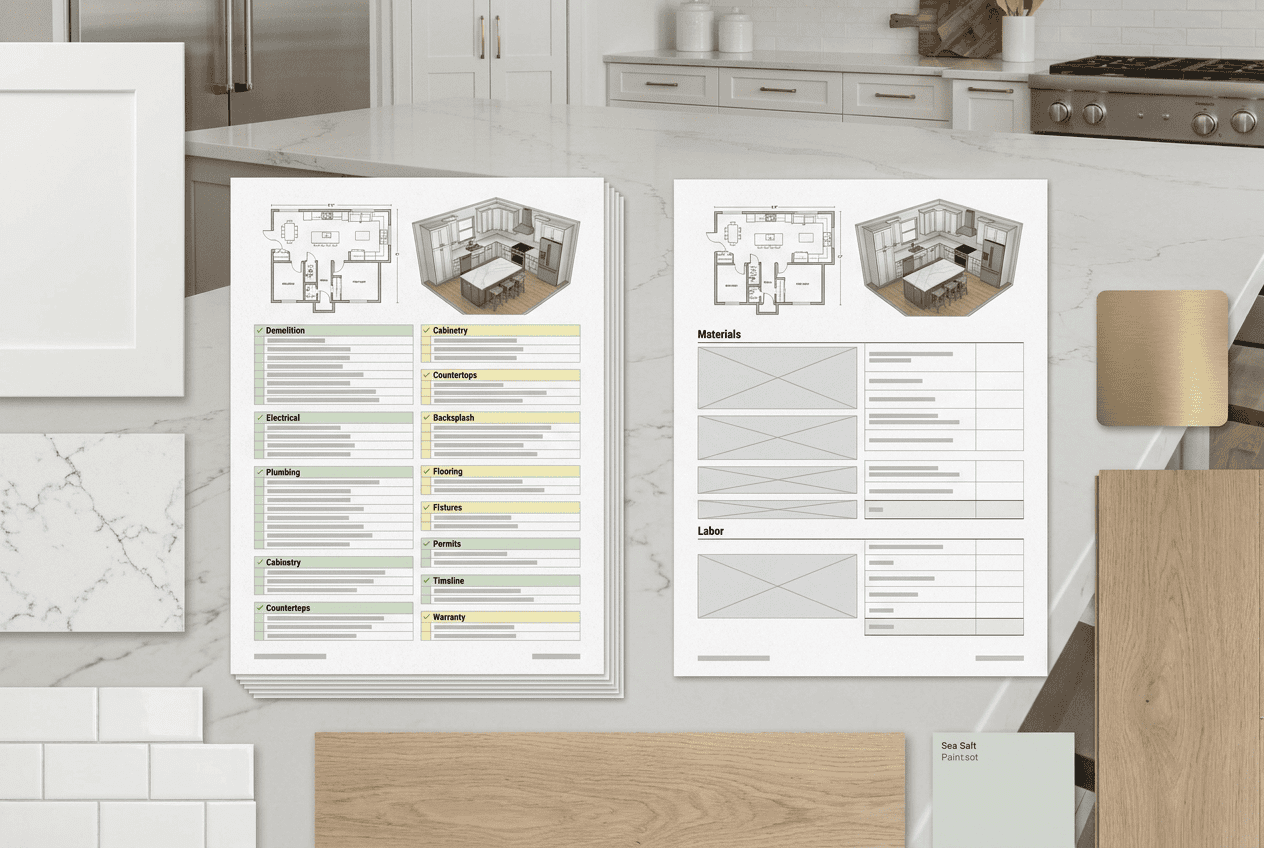
Contractor quotes are only comparable when they describe the same result. If one contractor plans to remove all existing siding and another intends to install over part of it, the totals do not represent equivalent work. The same problem appears when one roofing bid includes deck repairs while another lists them as an unknown extra.
Create a simple comparison form with the major work categories in rows and each proposal in a separate column. Do not copy only the totals. Record what each contractor includes, excludes, assumes, or leaves unanswered.
The scope should identify:
- Areas of the house included in the project
- Existing components that will be removed, protected, reused, or replaced
- Preparation and repair work included before installation
- Products, systems, and finish details to be installed
- Who handles permits, inspections, deliveries, and debris
- What constitutes complete work and who prepares the final punch list
Specific language matters. “Replace windows” is not enough. A stronger description identifies the openings, product line, installation method, trim, sealing, disposal, and finish work. “Install posts” should state the number, material, dimensions, and whether footings or engineering are included.
If a requested item does not appear, do not hope it is implied. Ask the contractor to revise the document. The only place an important responsibility safely exists is in the written scope or another document clearly incorporated into the agreement.
Review Materials, Product Specifications, and Substitutions
Materials can explain a meaningful price difference. Products in the same category may vary in thickness, finish, warranty, service life, and installation requirements. A fair comparison requires more than labels such as “premium siding.”
Look for the manufacturer, product line, profile, color, grade, size, and accessory components where relevant. The quote should also address the less visible materials that support performance: underlayment, flashing, fasteners, sealants, housewrap, insulation, trim, or waterproofing.
Material costs may change while a proposal is being prepared. A contractor should confirm supplier pricing before issuing a firm bid and state how long that price remains valid. If material costs can change later, the document should explain how the adjustment will be calculated.
Substitution language deserves close attention. It should not give the contractor unlimited authority to replace a specified product with “equal or better” materials. A better process requires written homeowner approval after the contractor identifies the proposed substitute, reason, cost effect, appearance, warranty, and schedule impact.
Design inspiration also needs to become a specification. A saved image can communicate ideas to builders, architects, or designers, but it does not define the exact product or installation detail. The final proposal should translate the idea into something the field team can build and the customer can verify.
Examine Allowances and Other Unconfirmed Costs
An allowance is a placeholder for an item that has not been selected or fully priced. Allowances are common, but too many can make a bid appear more certain than it is.
For every allowance, identify what it covers. Does a fixture allowance include tax, freight, delivery, installation, and accessories, or only the product on the supplier’s page? Does a flooring allowance cover preparation and waste? A low allowance can produce an attractive starting price while making later increases almost inevitable.
Ask for the quantity and basis behind each allowance. If it is priced per square foot, confirm the measured area and waste factor. For concealed conditions, request unit prices or a defined change-order process rather than an unsupported guess.
Some unknowns cannot be eliminated during project planning. The goal is to contain them. The quote should identify the condition, explain how it will be evaluated, state who has authority to proceed, and describe how added cost and time will be approved.
Identify Labor, Equipment, and Subcontractor Costs
A proposal does not need to expose every internal business margin, but it should make responsibility clear. Homeowners need to know whether labor, supervision, tools, lifts, scaffolding, disposal equipment, and specialty trades are included.
Subcontractor costs are particularly important when electrical, plumbing, roofing, excavation, or other regulated work is involved. The document should state whether those trades are included in the quoted price, carried as allowances, or contracted directly by the homeowner.
Ask who hires, schedules, supervises, and pays subcontractors. If a general contractor holds the main agreement, that company should coordinate the overall project and remain accountable for the work it assigns. Homeowners should not discover after signing that they are expected to locate an electrician or negotiate separately with a crew already on site.
Also confirm who provides temporary protection, storage, power, water, parking, and access. These details matter when a lift cannot enter the yard or materials have nowhere dry to sit.
Read the Exclusions, Assumptions, and Homeowner Responsibilities
Exclusions can be as important as inclusions. They show where the contractor has limited the price and where the homeowner may need another company, an additional budget, or a later decision.
Common exclusions include concealed damage, hazardous-material testing or removal, engineering, utility upgrades, finish painting, landscaping repair, interior trim, permit fees, or work outside a defined area. An exclusion is not automatically a problem. It becomes a problem when it conflicts with what the homeowner expects from a complete project.
Assumptions deserve the same review. A proposal may assume that existing sheathing is sound, the electrical service has capacity, or the homeowner will provide clear access. Ask what happens if the assumption is wrong and whether a rate, unit price, or approval process has been established.
Homeowner responsibilities should be scheduled. The client may need to choose colors, move property, secure pets, or approve shop drawings by specific dates. Clear deadlines protect both parties better than a request to “make selections promptly.”
Compare the Timeline and Job-Site Plan
A start date and a duration are not the same as a workable schedule. Contractor quotes should identify the estimated start window, major phases, and expected completion range. They should also name the conditions that must occur first, such as permit approval, product delivery, or completion of homeowner selections.
For larger projects, look for milestones that allow progress to be measured. These might include mobilization, demolition, rough construction, inspections, installation, finishes, cleanup, and final review. Ask whether the crew will work continuously or leave between phases while other jobs are active.
The site plan should address working hours, parking, property protection, cleanup, weather protection, and security. For an occupied home renovation, clarify dust control, temporary barriers, utility shutdowns, and access. If the company also performs commercial work, confirm its procedures fit a lived-in house.
Delays should have a communication process. The proposal cannot predict every weather event or supplier problem, but it can state who will report a delay, when the customer will receive an updated schedule, and how resequencing or added time will be documented.
Evaluate the Total Price and Payment Structure
Price matters, but it becomes useful only after scope and responsibility are aligned. Once the proposals describe comparable work, review what drives each total: materials, labor, supervision, equipment, insurance, permits, disposal, overhead, and warranty support.
Be cautious with a bid that is substantially lower than the others. It may reflect efficiency or a legitimate purchasing advantage, but it may also signal missing work, understated allowances, a measurement error, or a plan to recover margin through changes. Ask the contractor to explain the difference rather than assuming the lowest number creates automatic savings.
The payment schedule should follow meaningful progress. A deposit may support scheduling and material orders, while later payments can be tied to defined milestones. Avoid schedules that require most of the contract price to be paid before a similar share of the work and materials has been delivered.
Check what triggers each payment. “Halfway complete” invites disagreement. “After windows are delivered and installed” or “after rough inspections pass” is easier to verify. The final balance should remain connected to the agreed completion standard, closeout documents, and punch-list process.
Also review accepted payment methods, due dates, late fees, financing terms, and interest, if any. Never treat a request to pay the entire job upfront as routine. The Federal Trade Commission’s home-improvement guidance advises consumers to be wary of contractors who demand full payment in advance or pressure them for an immediate decision.
Confirm Permits, Insurance, and Licensing
Contractor quotes should identify who obtains required permits, pays the fees, schedules inspections, and responds to corrections. If the homeowner is asked to pull a permit, ask why. That arrangement can affect responsibility and should never be buried in fine print.
Request current proof of general liability insurance and workers’ compensation coverage as applicable. The business name on the insurance documents should match the company named in the proposal and contract. Verify required licensing through the appropriate state or local authority instead of relying on a logo or license number printed on the bid.
Montana transitioned its construction contractor registration program to state-administered licensing in 2026. The Department of Labor & Industry also explains that licensing enforcement does not evaluate workmanship quality, so homeowners should check current Montana contractor requirements and still review references, experience, and completed projects.
Compare Workmanship and Material Warranties
A long warranty headline does not tell you what will actually be covered. Separate the contractor’s workmanship warranty from manufacturer warranties on materials and equipment.
For each proposal, compare:
- The length of workmanship coverage
- The events or defects that qualify for service
- Maintenance requirements and exclusions
- Who registers manufacturer warranties
- Whether labor is included when a product claim is approved
- How customers request service and when they can expect a response
- Whether the warranty transfers if the house is sold
Ask who resolves a problem that involves both product and installation. The contractor should not automatically send the homeowner to the manufacturer, while the manufacturer says the problem is labor. The contract needs a clear starting point for diagnosis and support.
Review the contractor’s business history, references, and service process rather than judging a warranty by years alone.
Ask Questions Before Accepting the Proposal
Do not wait until contract signing to raise unclear details. Mark every difference between proposals and speak with each contractor while revisions are still easy to make.
Useful questions include:
- Is this a firm quote, a bid, or an estimate that may change?
- Which materials, labor, permits, fees, and services are included?
- What is specifically excluded?
- Which selections remain open, and what do the allowances cover?
- Are subcontractors, equipment, delivery, disposal, and cleanup included?
- Who supervises the job and communicates with the client?
- What could change the price, and how will approval be documented?
- Which milestones trigger payments?
- What is required before work can begin?
- What does complete mean, and what warranty follows the work?
Our list of questions to ask contractors goes beyond the proposal itself to cover past work, references, supervision, communication, delays, subcontractors, and closeout. The answers should match the promises made in the written documents.
If a contractor gives a clear verbal answer, request the same detail in the revised proposal or contract. Verbal advice can help explain the work, but it is not a reliable substitute for written terms.
How to Choose Between Contractor Quotes
The strongest proposal is the one that makes the project easiest to understand and manage. It should reflect the actual property, define a complete scope, identify materials, assign responsibilities, and explain how schedule or price changes will be handled.
Use a final comparison that weighs:
- Relevant experience and references
- Completeness of the scope
- Product and installation specifications
- Realistic allowances and exclusions
- Supervision and communication
- Schedule and site management
- Payment balance and change controls
- Insurance, credentials, and warranty support
- Total price for the work actually included
Do not award the job from the first page or assume three totals represent identical projects. Review the full documents, resolve contradictions, and request updated versions. Then choose the contractor with the clearest plan and best fit.
Clear Proposals for Western Montana Homeowners
MCLC Contracting, LLC provides detailed proposals for residential exterior projects throughout Western Montana. We take time to review the property, define the work, discuss materials, and explain what is included before construction begins.
If you are planning siding, roofing, window, door, or gutter work, contact MCLC Contracting at (406) 565-3999 to schedule an on-site conversation about your project.