
A general contractor gives a homeowner one company responsible for organizing the construction project. The general contractor coordinates trades, materials, inspections, schedules, and communication.
That role helps when a project extends beyond one task. Renovations, structural repairs, and connected interior-exterior work can involve several contractors whose work must happen in order.
A license does not guarantee a smooth process. Homeowners still need to know what the contractor manages and how changes are documented.
What Does a General Contractor Do for Homeowners?
A homeowner should not be settling trade disputes or discovering that nobody scheduled an inspection. Preventing those failures is part of a general contractor’s responsibilities. These are important responsibilities, not office busywork.
The General Contractor’s Role in the Construction Industry
In the construction industry, the general contractor usually holds the main contract with the project owner and organizes the construction work needed to complete the building project.
A general contractor works between the property owner, subcontractors, suppliers, workers, and design professionals. Self-performed work matters less than overseeing the full scope.
General Contractor or Construction Manager?
A construction manager may advise and coordinate while the owner holds separate trade contracts. A general contractor typically carries more direct responsibility for delivering the contracted work. The roles have similar responsibilities for coordination, but not the same contract authority.
For most residential projects, divided authority is the wrong call unless the contract requires it. Several people can manage different tasks, but one person must own the result.
Responsibilities to the Project Owner
The general contractor is responsible for overseeing the schedule, construction budget, permits, inspections, materials, safety, subcontractors, and quality while telling the project owner which decisions are due.
The property owner still has responsibilities. Selections, access, approvals, and change requests can affect the process. A closer look at general contractor responsibilities explains which decisions remain with the homeowner and which tasks should stay under the contractor’s control. The main point is that accountability should be clear.
Interior and Exterior Construction Work a General Contractor Can Manage
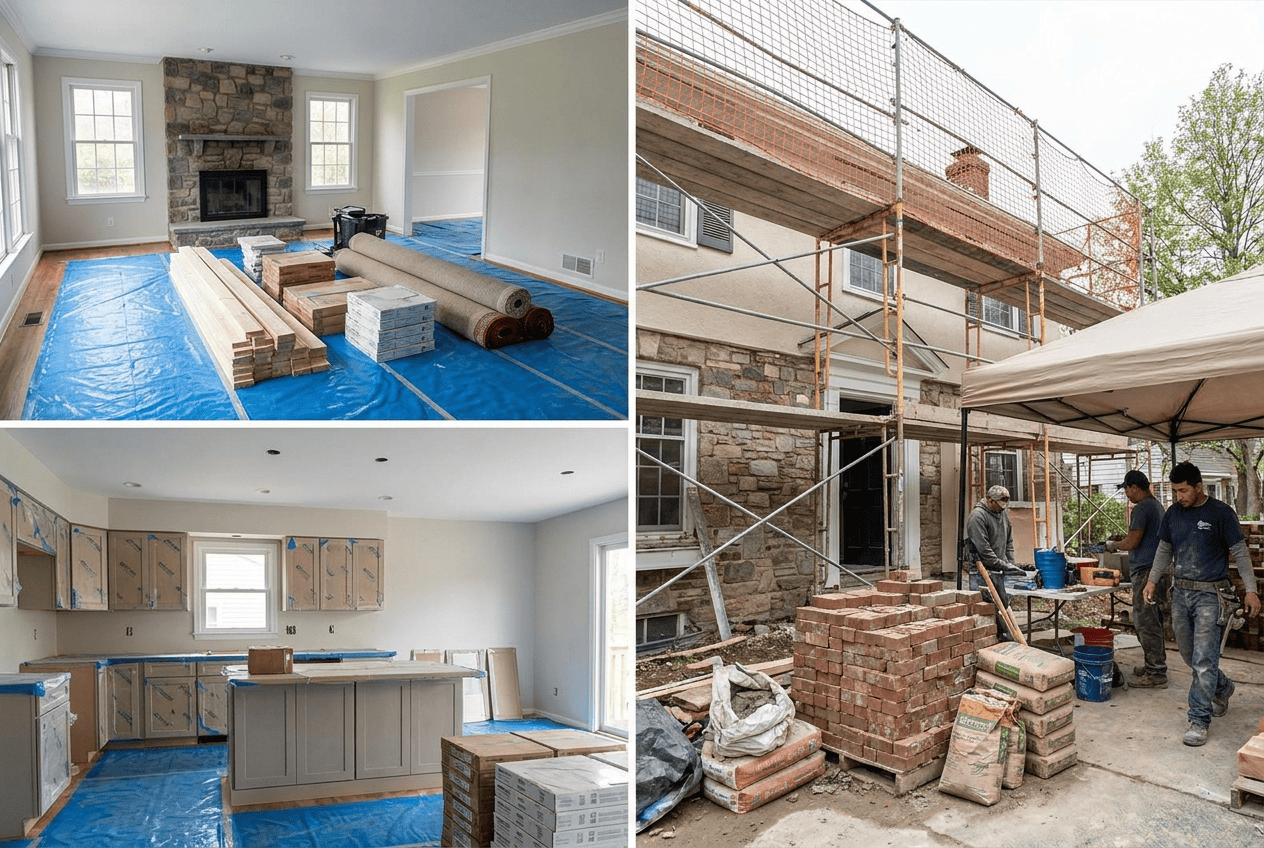
A general contractor for home renovation earns the role when work crosses trade boundaries. The test is whether the company can manage different aspects of the project without gaps.
Interior Renovation and Construction Work
Interior construction projects may include kitchens, bathrooms, basements, framing changes, flooring, drywall, finish carpentry, plumbing, and electrical tasks. Those trades cannot arrive whenever they are available.
Framing may need to be complete before rough plumbing and electrical work. Inspections may come before insulation and drywall. Cabinets cannot be installed correctly if walls, floors, or utility locations are wrong.
Exterior Building Projects
Exterior construction projects can include siding, decks, doors, windows, structural repairs, roofing coordination, and trim. These jobs involve weather exposure, equipment, access, and property protection.
Exterior work often reaches indoors. For example, window replacement may disturb trim and drywall. Wall repair can uncover framing or moisture damage. Treating the two scopes as unrelated creates unfinished transitions and duplicated work.
Projects That Require Multiple Trades and Materials
A general contractor is justified when a project includes multiple subcontractors, structural changes, inspections, long-lead materials, or interior and exterior work touching one building system.
The general contractor need not self-perform every service. Reliable trade expertise and disciplined coordination matter more than advertising services the company cannot supervise.
How a General Contractor Organizes Pre-Construction and the Construction Process
Cabinets arrive before the room is ready. The plumber has a different fixture specification than the installer. Nobody requested the inspection needed before the next crew starts. Small failures like these can stall an entire project.
A strong general contractor prevents the coordination failures mentioned earlier before the construction process begins. The process should be built around decisions, dependencies, documentation, and actual site conditions—not a hopeful start date.
Pre-Construction Planning
Pre construction is where the contractor defines the scope closely enough to build it safely and correctly. That means reviewing plans, confirming access, checking existing conditions, identifying unclear details, and requesting missing information from the design team.
The project team should identify permits, inspections, engineering needs, and long-lead materials. Starting demolition with major decisions open pushes risk into the costliest phase.
The construction budget should match what is understood. Allowances can cover unfinished selections, but they need detailed descriptions. A vague number without a clear basis is not useful budgeting.
Homeowners have deadlines too. Appliance specifications, finish selections, and access decisions affect several trades. Uncommunicated deadlines are unfair; delayed decisions still move schedules.
Scheduling Materials, Subcontractors, and the Project Team
A schedule is not merely a list of dates. It must account for trade order, material availability, inspections, curing time, weather-sensitive work, and the availability of qualified subcontractors.
For example, consider a wall opened for a new layout. Framing comes first. Plumbing and electrical rough-ins follow. Those systems may require inspection before insulation and drywall. Finish work comes later. Skipping one step can require workers to remove completed construction.
The general contractor should manage those handoffs. Each trade needs current specifications, correct materials, a prepared job site, and a clear completion point.
Scheduling every task as tightly as possible is not always smart. A modest buffer can protect the plan when an inspection moves or hidden damage requires repair. An unrealistic schedule looks efficient on paper and becomes expensive in the field.
Tracking Progress, Owner Decisions, and Project Closeout
The general contractor should track progress against the current plan and tell the owner when conditions change. Silence means the homeowner hears about problems after the cost and schedule effects grow.
Changed work should be documented before it proceeds whenever possible. The request should explain what changed, why, the cost, and any timing effect. “We will sort it out later” is how small scope questions become contract disputes.
Communication needs a routine: weekly meetings or milestone updates with decisions and responsibility recorded.
Closeout is part of the contract. The contractor should complete punch-list work, coordinate final inspections, collect warranties, and provide promised contract documents.
Final payment should follow the agreed closeout steps, not the contractor’s desire to move crews and tools to another project.
Homeowners should also understand subcontractor payment and lien rights in their location. Where appropriate, request lien waivers or similar documentation before final payment. A project is complete when the scope is finished, deficiencies are corrected, approvals are in place, and the owner has the required documents.
How the General Contractor Works With the Design Team and Subcontractors
The architect defines design intent, engineering professionals address structural requirements, and subcontractors perform specialized work. Understanding the different residential contractor types helps homeowners see why each specialist needs a defined scope while the general contractor coordinates the full result.
When coordination is weak, the homeowner becomes the messenger between people who should be speaking directly. That is a poor delivery method.
Working With the Architect, Engineering Professionals, and Design Team
The architect and design team may provide drawings, specifications, selections, and responses to field questions. The contractor should review that information before affected work begins and raise conflicts early.
Existing buildings rarely match every assumption on paper. When field conditions differ, the general contractor should document the issue and involve the architect or engineer before workers improvise a permanent solution.
General Contractor vs. Subcontractor and Prime Contractor
A subcontractor performs a defined trade scope. The general contractor manages the overall contract and coordinates those trades. Understanding the contractor role differences helps homeowners determine who is responsible for one specialized task and who is responsible for the project as a whole.
A prime contractor holds a direct agreement with the owner. On many residential jobs, the general contractor is also the prime contractor. The homeowner should confirm who is paying, directing, and scheduling each trade.
Be cautious when someone charges a full management fee but expects the homeowner to manage several subcontractors directly. Direct contracts can work, but responsibilities must be written clearly.
What a Licensed General Contractor Handles on the Job Site

A license is a starting point. It is not proof that a contractor communicates well, protects the building, or produces quality work.
Licensing Requirements, Liability Insurance, and Permits
Licensing requirements vary by state, municipality, and project type. In Montana, the contractor program began transitioning from registration to a state-administered license program in 2026, so homeowners should review the current Montana contractor requirements and any local rules that apply to the property.
Ask whether the contractor is licensed, then request license information and proof of liability insurance. Confirm that the contract names the same licensed and insured company.
The contract should identify who handles permits and inspections. For contractor-managed construction work, the licensed general contractor should usually manage permits tied to that scope.
Job-Site Safety, Property Protection, and Quality Control
Good site management is visible before the finished work is visible. For projects that disturb painted surfaces in homes built before 1978, federal lead-safe renovation rules may require certified firms, trained renovators, occupant education, and specific work practices for controlling hazardous dust.
Look for:
- Floor protection and dust containment suited to the work
- Organized materials, secure tools, and controlled pathways
- Protection for landscaping, doors, windows, and finished surfaces
- Regular cleanup and safe access around children and pets
A chronically disorganized job site is a warning. Lost materials, damaged finishes, blocked access, and safety problems often grow from the same lack of oversight.
Quality control should happen throughout construction. The person responsible for overseeing the site should check layout, dimensions, materials, and trade work before the next layer covers it. Finding every problem during the final walkthrough is too late.
How to Recognize a Good Contractor and Review the Bidding Process
Reviews and a polished presentation are not enough. Homeowners should expect a good contractor to explain how the company manages successful construction projects when conditions change and keeps clients informed.
Evidence of Successful Projects and Professional Management
Ask contractors for detailed descriptions of similar construction projects and the services they managed, not just photographs. Former clients can discuss communication, problem-solving, and final quality.
Look for evidence of:
- Experience with projects close to yours in size and complexity
- A clear communication and change-order process
- Established relationships with qualified subcontractors
- Written planning, scheduling, and quality-control practices
Industry experts are easy to claim. Professional systems are harder to fake. A contractor who cannot explain how the project will be managed before signing is unlikely to become more organized after receiving a deposit.
A structured contractor hiring process helps homeowners move from verifying credentials and reviewing past work to comparing proposals and checking contract terms in the right order.
Before choosing a company, prepare specific questions for contractors about supervision, subcontractors, schedule updates, change orders, property protection, and project closeout. The quality of the answers often reveals more than a polished sales presentation.
Contract Documents, Specifications, General Conditions, and Budget
The bidding process should produce more than a total cost. Compare the scope, materials, specifications, allowances, exclusions, and general conditions included in each proposal.
A lower quote often includes less. One contractor may include permits, protection, cleanup, supervision, and repair of disturbed finishes. Another may leave those tasks undefined.
A detailed contractor quote comparison should account for what each proposal includes, excludes, or leaves as an allowance, not merely which contractor presents the lowest total.
Contract documents should explain payment timing, changes, schedule assumptions, warranty obligations, and final payment requirements.
Do not sign a contract that relies on verbal promises to fill major gaps later. If an item affects cost, quality, appearance, lien rights, or responsibility, put it in writing.
When Do You Need a General Contractor Instead of a Specialist?
A small, clearly defined single-trade job may only require the appropriate licensed specialist, not a general contractor. Hiring a full construction company for a simple repair can add complexity without useful control.
Multi-trade construction projects are different. The benefits of one accountable manager show up when structural work, permits, design coordination, inspections, or connected interior and exterior scopes collide.
A Simple Decision Test for Homeowners
Count the handoffs. If one contractor must finish before another can begin, if different materials affect several trades, or if the building must remain protected between phases, the project needs active management.
A specialty contractor may be enough when the scope is narrow and responsibility is obvious. Reviewing the different general contractor types can help homeowners distinguish renovation contractors, specialty-focused firms, design-build companies, and contractors equipped to manage broader residential construction.
MCLC Contracting, LLC helps homeowners sort through the moving parts of interior and exterior construction before work begins. A successful project starts with a clear scope, realistic expectations, and one team taking responsibility for how the work is coordinated.