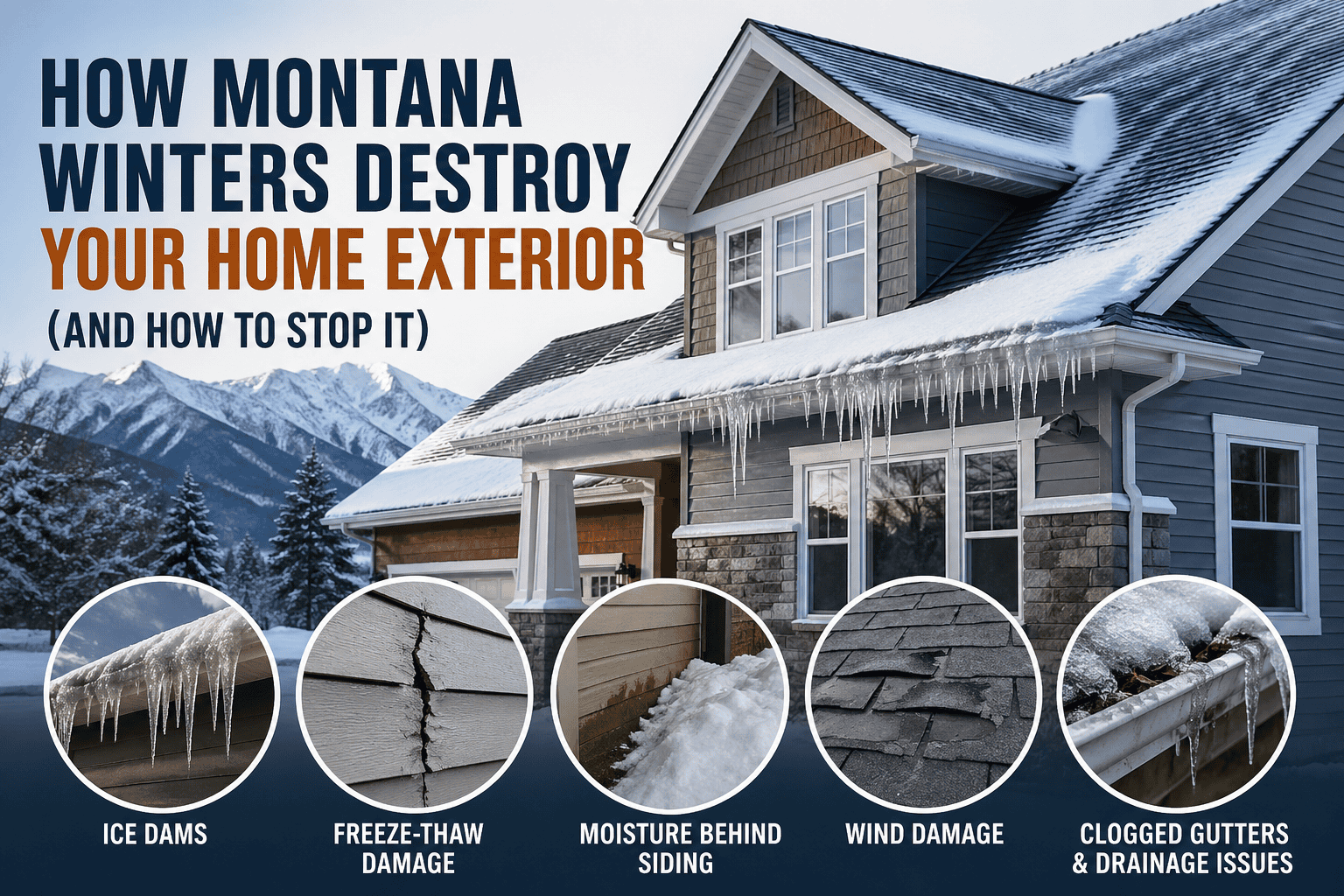
How Montana Winters Destroy Your Home Exterior (And How to Stop It)
Montana winters aren’t just “a little cold.” They’re brutal—and your home takes the hit every single year.
Between freezing temperatures, heavy snow loads, high winds, and constant freeze-thaw cycles, your exterior is under stress for months straight. The problem is, most of the damage doesn’t show up right away… it shows up later, when it’s already expensive.
If you own a home in Montana, this isn’t something to ignore. Let’s break down exactly how winter is damaging your home—and what you can do to stop it before it turns into a major repair.
1. Ice Dams: The Silent Roof Killer
Ice dams form when heat escapes through your roof, melting snow that refreezes at the eaves. That ice builds up and traps water behind it.
That water has nowhere to go—so it pushes its way under your shingles and into your home.
What it causes:
- Roof leaks
- Rotting roof decking
- Insulation damage
- Interior water stains
How to stop it:
- Proper attic insulation
- Ventilation that actually works
- Ice & water shield installed under roofing
- Clean, functional gutters
If your roof wasn’t built or updated properly, this is where problems start.
2. Freeze-Thaw Cycles Crack Everything
Montana weather loves to bounce above and below freezing. Water gets into tiny cracks—then freezes, expands, and makes those cracks bigger.
Repeat that cycle enough times, and you’re dealing with real damage.
Where this shows up:
- Siding splits and warps
- Trim pulls away
- Caulking fails
- Small gaps turn into major openings
How to stop it:
- Seal all exterior penetrations before winter
- Use high-quality siding materials (LP SmartSide, Diamond Kote, steel)
- Routine inspections—don’t wait until it’s obvious
3. Snow Load and Roof Stress
Snow is heavy. Wet snow is even worse.
A buildup on your roof can stress the entire structure—especially if there are weak spots or previous damage.
Warning signs:
- Sagging roof lines
- Creaking sounds during storms
- Ice buildup along ridges
How to stop it:
- Upgrade to durable roofing systems
- Proper roof pitch and drainage
- Snow management (roof rakes, professional removal if needed)
Metal roofing, in particular, sheds snow much better than shingles in this climate.
4. Wind Damage You Don’t See Right Away
Montana winds don’t mess around. They can lift shingles, loosen siding, and expose your home to moisture—even if everything looks fine from the ground.
Common issues:
- Lifted or missing shingles
- Loose siding panels
- Damaged flashing (big one)
How to stop it:
- Proper fastening during installation
- Regular inspections after major storms
- Reinforced flashing around windows, doors, and roof lines
This is where cheap installs fail fast.
5. Moisture Behind Your Siding
Here’s the one most homeowners never see coming.
Snow sits against your house. It melts. Water gets behind your siding. Then it freezes again—or just sits there.
Now you’ve got:
- Mold
- Rot
- Insulation failure
- Structural damage
All hidden behind your walls.
How to stop it:
- Proper house wrap and moisture barrier
- Correct flashing around every opening
- Professional siding installation (not rushed, not cut corners)
This is the difference between a siding job that lasts 30 years… and one that fails in 5.
6. Gutters and Drainage Failures
If your gutters are clogged, damaged, or frozen solid, water doesn’t get directed away from your home.
It pools. It freezes. It backs up.
And then:
- Ice dams get worse
- Fascia and soffit rot
- Foundation issues can start
How to stop it:
- Clean gutters before winter
- Install proper drainage systems
- Repair or replace damaged sections
The Hard Truth
Most winter damage isn’t caused by the weather alone.
It’s caused by:
- Poor installation
- Cheap materials
- Lack of maintenance
Montana winters just expose those weaknesses.
What You Should Do Right Now
If you want to avoid expensive repairs, here’s the no-nonsense plan:
- Inspect your roof, siding, and windows every year
- Fix small issues before winter—not after
- Invest in quality materials the first time
- Work with a contractor who installs things the right way
Because once water gets in, the cost goes up fast.
Need Help Protecting Your Home?
At MCLC Contracting, we handle everything from siding and windows to full exterior remodels—built specifically for Montana conditions.
📞 406-565-3999
📧 mclccontracting@gmail.com
🌐 www.mclccontracting.com
Built Right. Built to Last.
🔗 Helpful Resources
- U.S. Department of Energy – Learn how to properly insulate and protect your home from heat loss https://www.energy.gov/energysaver/weatherize
- Insurance Institute for Business & Home Safety – Tips on preventing severe weather damage https://ibhs.org/risk-research/winter-weather/
- National Roofing Contractors Association – Best practices for maintaining your roof https://www.nrca.net/homeowner
- EPA – Understanding moisture issues and prevention https://www.epa.gov/mold