
The right contractor is not always the person who can perform the work. It is the company equipped to take responsibility for the scope, coordinate everyone involved, and deliver a finished result.
That distinction matters because the construction world uses several overlapping titles. General contractors manage complete projects. Subcontractors perform defined portions of work under another contractor. Specialty contractors concentrate on one trade, while remodeling contractors and design-build contractors organize projects around a particular delivery method. Individual trades may also contract directly with property owners when the job is narrow enough.
Understanding the different types of contractors supports informed decisions and prevents two common mistakes: paying for management a simple repair does not need or trying to manage a complex construction project that requires professional coordination.
How the Main Types of Contractors Differ
Contractor titles make more sense when you separate three questions:
- Who holds the agreement with the homeowner?
- Who manages the overall project?
- Who performs each specific trade?
General contractors usually hold the main construction agreement and oversee the entire project. Subcontractors generally work under that company to complete specific tasks. Specialty contractors are defined by technical expertise—such as electrical, plumbing, HVAC, roofing, or concrete work—not necessarily by who hired them.
That means a particular contractor can fit more than one category. An electrical company is a specialty contractor. It may also be a subcontractor when hired by a general contractor or a prime contractor when hired directly by the homeowner.
This contract chain is more important than the label on a truck. It tells you who schedules the job, approves changes, pays other trades, corrects defective work, and answers when one phase delays another.
General Contractors Manage the Entire Construction Project
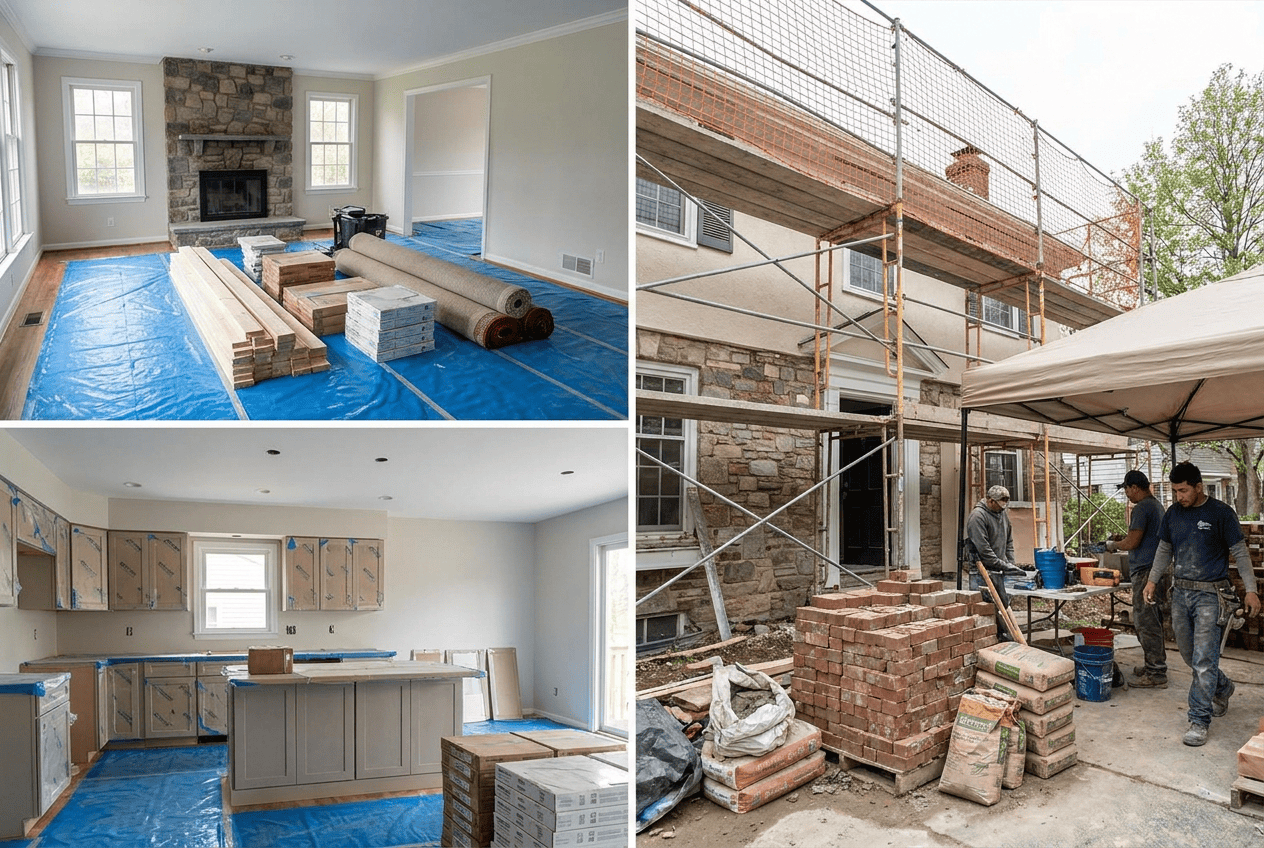
General contractors are responsible for turning several scopes into one coordinated construction project. They may use their own crews for some construction work and hire subcontractors for specialized portions. Either approach can work. The important part is that one company owns the sequence and the final result.
A residential general contractor typically manages scope, estimates, materials, scheduling, permits, inspections, subcontractors, job-site protection, quality control, changes, and closeout. Homeowners should not have to settle scheduling disputes between the plumber and electrician or discover that nobody arranged an inspection.
When a General Contractor Is the Right Choice
Hire a general contractor when the work crosses trade boundaries or one phase depends on another. Common examples include:
- A kitchen renovation involving demolition, framing, electrical work, plumbing, drywall installation, cabinets, flooring, and painting
- An exterior renovation connecting roofing, siding, windows, gutters, trim, and drainage systems
- Structural work requiring engineering, permits, inspections, and finish repairs
- Larger projects with several material orders and dependent schedules
The value is active control of the construction process. Good general contractors identify missing information before work begins, give every trade current plans, manage material availability, and keep the homeowner informed when conditions change.
For a one-day, single-trade repair, that management layer may be unnecessary. Hiring a general contractor only makes sense when the coordination creates real value.
Subcontractors Complete Defined Parts of Building Projects
Subcontractors agree to perform a limited scope for the contractor holding the main agreement. On a home addition, one subcontractor may frame the structure, another may install electrical wiring, and another may complete roofing. Each has responsibility for its own job, while the general contractor remains responsible for coordinating the overall project.
The difference between a role and a trade causes confusion. “Subcontractor” describes the business relationship, not the skill. Plumbing, electrical, flooring, and painting contractors can all work as subcontractors.
Our guide to contractor role differences explains why homeowners normally communicate through the general contractor when that company hired the trade. Bypassing the project manager and directing subcontractors yourself can create conflicting instructions, disputed changes, and work that no longer matches the contract.
What Homeowners Should Know About Subcontractors
Using subcontractors is standard practice. It is not a red flag by itself. The questions that matter are:
- Who selected and vetted each subcontractor?
- Who verifies licensing and insurance where required?
- Who schedules and inspects the work?
- Who pays the subcontractors and suppliers?
- Who is responsible for correction and warranty service?
General contractors should be able to answer those questions without shifting management back to the homeowner. If you are paying one company to manage the job, that company should remain your accountable point of contact.
Specialty Contractors Bring Specialized Skills to One Trade
Specialty contractors focus on a specific trade, material, or building system. Their concentrated training and equipment make them essential, especially when technical work affects safety or must meet local building codes.
Some specialty contractors work almost entirely under general contractors. Others contract directly with homeowners for replacements and repairs. The arrangement depends on whether the work stands alone or connects to a broader renovation.
Electrical Contractors
Electrical contractors install, alter, and repair electrical systems. Their work can include service panels, new wiring, circuits, outlets, lighting systems, and connections for appliances or mechanical equipment.
Do not ask a general handyman to repair electrical systems simply because the visible task looks small. Electrical work can affect fire safety, permits, inspections, and several hidden parts of the building. A qualified electrical contractor should handle regulated work and coordinate with other trades before walls are closed.
Plumbing Contractors
Plumbing contractors install and repair water supply, waste, venting, fixtures, water heaters, and drainage systems. During a bathroom remodel, the plumber may need to complete rough plumbing before wallboard and tile, then return later for fixture installation.
Moving one drain can affect framing, floor height, cabinet placement, and the room below. That is why plumbing contractors need complete specifications rather than a last-minute request after finishes arrive.
HVAC Contractors
HVAC contractors install, service, and repair heating and ventilation systems and air conditioning systems. An HVAC specialist may evaluate air conditioners, equipment sizing, ductwork, vent locations, controls, combustion air, and energy efficiency.
An addition or major layout change can alter how existing HVAC systems perform. Simply extending a duct is not always enough. Qualified HVAC contractors should determine whether the current system can serve the new space and whether supply, return, and ventilation requirements are being met.
Roofing and Exterior Contractors
Roofing contractors install and repair systems made from asphalt shingles, metal, membrane products, flashing, and other materials. Their scope should address water shedding, penetrations, underlayment, edges, and transitions—not only the visible roof covering.
Exterior specialty contractors may focus on siding, windows, doors, gutters, or decks that protect the house and improve curb appeal. These scopes often overlap. A window installation can affect siding and interior trim, while a roof edge can affect gutters and fascia. When several systems meet, one contractor needs authority over those transitions.
Flooring, Drywall, and Painting Contractors
Flooring contractors install materials such as hardwood, resilient flooring, tile, laminate, and carpet. Proper work begins below the finished floor: moisture, flatness, movement, and surface preparation can matter as much as the product.
Drywall contractors hang, finish, and repair wallboard. Painting contractors prepare surfaces, protect adjacent finishes, apply coatings, and complete touchups. These finishing trades expose earlier errors. Uneven framing, poorly placed outlets, or rushed drywall work will still show after expensive paint is applied.
Concrete, Masonry, and Excavation Contractors
Concrete contractors form, reinforce, place, and finish concrete work for foundations, slabs, walks, patios, and other structures. Masonry contractors build or repair assemblies using masonry materials such as brick, stone, mortar, and concrete blocks.
Excavation contractors use heavy machinery to grade sites, dig foundations, prepare utility trenches, and manage earthwork. Their work affects drainage, elevations, access, and what can be built above it. Mistakes at this stage are difficult to hide in the finished structure.
Remodeling Contractors Work Within Existing Homes

Remodeling contractors specialize in changing existing buildings. Many are general contractors, but their experience is different from companies focused mainly on new construction.
A renovation begins with conditions that cannot be fully seen until work opens the building. Walls may contain old wiring, previous repairs, moisture damage, or framing that does not match the plans. Remodelers also have to protect occupied areas, control dust, maintain access, and sequence shutdowns around daily life.
That experience matters. Home builders who are efficient on an open site may not have strong systems for protecting an occupied house or tying new construction into old materials. Renovation work demands careful investigation and clear change-order procedures.
For homes built before 1978, contractors working on paid projects that disturb painted surfaces may also need to follow the EPA’s lead-safe renovation requirements, including firm certification, trained workers, and specific practices that reduce hazardous dust.
Design Build Contractors Combine Design and Construction
Design-build contractors place design and construction responsibility under one agreement. The company may employ designers or coordinate architects and engineers as part of the project team.
This model can reduce the gap between what is drawn and what can be built within the budget. Contractors can provide early input on materials, sequencing, and cost while design decisions are still flexible. That is useful for a new house, a major addition, or a renovation with substantial layout and structural work.
Design-build is not automatically faster or cheaper. The result still depends on a clear scope, qualified design professionals, realistic pricing, and disciplined project management. Homeowners should also understand how design fees, preconstruction services, ownership of drawings, and cancellation are handled before signing.
The main advantage is unified responsibility. The main tradeoff is that the owner is choosing the design and construction team together instead of bidding a completed design to several construction contractors.
Home Builders Focus on New Residential Construction
Home builders organize the construction of new houses. Production builders repeat a limited set of plans and options, while custom builders manage one-off building projects around the owner’s site, design, and selections.
New-home construction involves excavation, foundations, framing, roofing, plumbing systems, electrical systems, HVAC systems, insulation, finishes, and site work. Like other general contractors, home builders must coordinate many different types of contractors from an empty site to a finished structure.
Do not assume every home builder is the right contractor for a remodel. New construction allows planned access, open framing, and a known sequence. Remodeling requires investigation, protection, and difficult transitions with an existing building. Relevant experience matters most.
Different Types of General Contractors Serve Different Projects
“General contractor” is a broad category. Some firms manage custom homes, some concentrate on additions and renovations, and others specialize in connected exterior systems. A contractor may be legally able to take a project but still lack the relevant crew, supplier relationships, or field experience.
Our comparison of general contractor types explains how residential builders, remodeling contractors, design-build companies, and specialty-focused general contractors manage different scopes. The main point is practical: hire for the work being proposed, not the widest service list.
Ask how many similar projects the company has completed recently, who will supervise the site, and which work will be self-performed. Past work should resemble your project in size, materials, complexity, and working conditions.
Commercial Construction Contractors Are Not Automatically a Better Fit
Commercial construction and residential construction share trades, materials, and basic management principles, but the working conditions are different. Commercial projects may involve larger project teams, formal submittals, different codes, specialized equipment, and buildings designed around business operations. Industrial facilities can add process systems, heavy equipment, and safety protocols rarely seen in a home.
Experience with commercial buildings can be valuable, but it does not automatically make a company better for residential work. Homeowners need contractors who understand occupied spaces, finish expectations, personal communication, and the smaller details that affect daily living.
The reverse is also true. A strong residential remodeler should not claim commercial construction expertise without the staffing and systems those projects require.
How Different Types of Contractors Affect the Schedule
A project schedule is a chain of handoffs. On a bathroom renovation, demolition exposes the framing. The plumber and electrician complete rough work. Inspections may follow. Walls are closed, waterproofing is installed, tile begins, and finish trades return. One missed decision can stop several contractors.
The general contractor should manage:
- Current plans and specifications for every trade
- Required permits and inspections
- Material ordering and delivery dates
- Access, protection, cleanup, and site security
- The order in which contractors enter the job
- Quality checks before completed work is covered
- Written approval for scope, price, and schedule changes
Miscommunication becomes expensive when each contractor is working from a different assumption. Homeowners can help by making selections on time and communicating through the established point of contact. They should not become the unpaid project manager.
Challenges Contractors Face—and What They Mean for Homeowners
Contractors face weather, inspection delays, labor availability, long-lead materials, and concealed building conditions. Legitimate constraints should be planned and communicated, not used as a blanket excuse.
Cash flow also affects construction businesses because labor, materials, and subcontractors may need to be paid before later progress payments arrive. Homeowners should not solve a contractor’s cash flow problem by paying far ahead of completed work. A milestone-based payment schedule protects both parties and gives the company a predictable billing structure.
Ask how schedule changes will be reported, who can approve substitutions, and how unexpected work is documented. Strong contractors do not promise that nothing will go wrong. They explain how the company will respond when it does.
How to Choose Among the Different Types of Contractors

Start with the scope, not a contractor title.
If the job involves one independent system—such as replacing a water heater or repairing a circuit—hire the qualified specialty contractor. If several trades must work in sequence, hire a general contractor capable of managing the entire project. If substantial design decisions remain, a design-build contractor may provide better coordination. For a new home, look for a builder with comparable completed houses and a reliable closeout process.
Then verify the company itself. Homeowners should:
- Review comparable projects, references, and portfolios
- Confirm the legal business name, insurance, and required credentials
- Identify who holds the main agreement and supervises the job
- Ask which work uses employees and which uses subcontractors
- Compare scope, materials, exclusions, allowances, and payment terms
- Require written procedures for changes, delays, punch-list work, and warranties
Montana’s contractor program changed from registration to state-administered licensure in 2026, but the Department of Labor & Industry also states that licensing enforcement does not evaluate workmanship quality. Homeowners should review current Montana contractor licensing and still investigate experience, management, and completed work.
The wrong choice is usually visible early. A company that cannot define responsibility before signing will not become clearer after demolition. The right contractor should be able to explain who does the work, who manages it, what happens next, and how the homeowner is protected when the plan changes.
One Accountable Team for Your Residential Project
MCLC Contracting, LLC helps homeowners plan and complete residential construction and exterior improvement projects throughout Western Montana. We focus on clear scopes, dependable communication, quality materials, and work that holds up.
If your project involves several connected systems or you are unsure which types of contractors it requires, contact MCLC Contracting at (406) 565-3999 to discuss the scope and the best way to organize the work.