
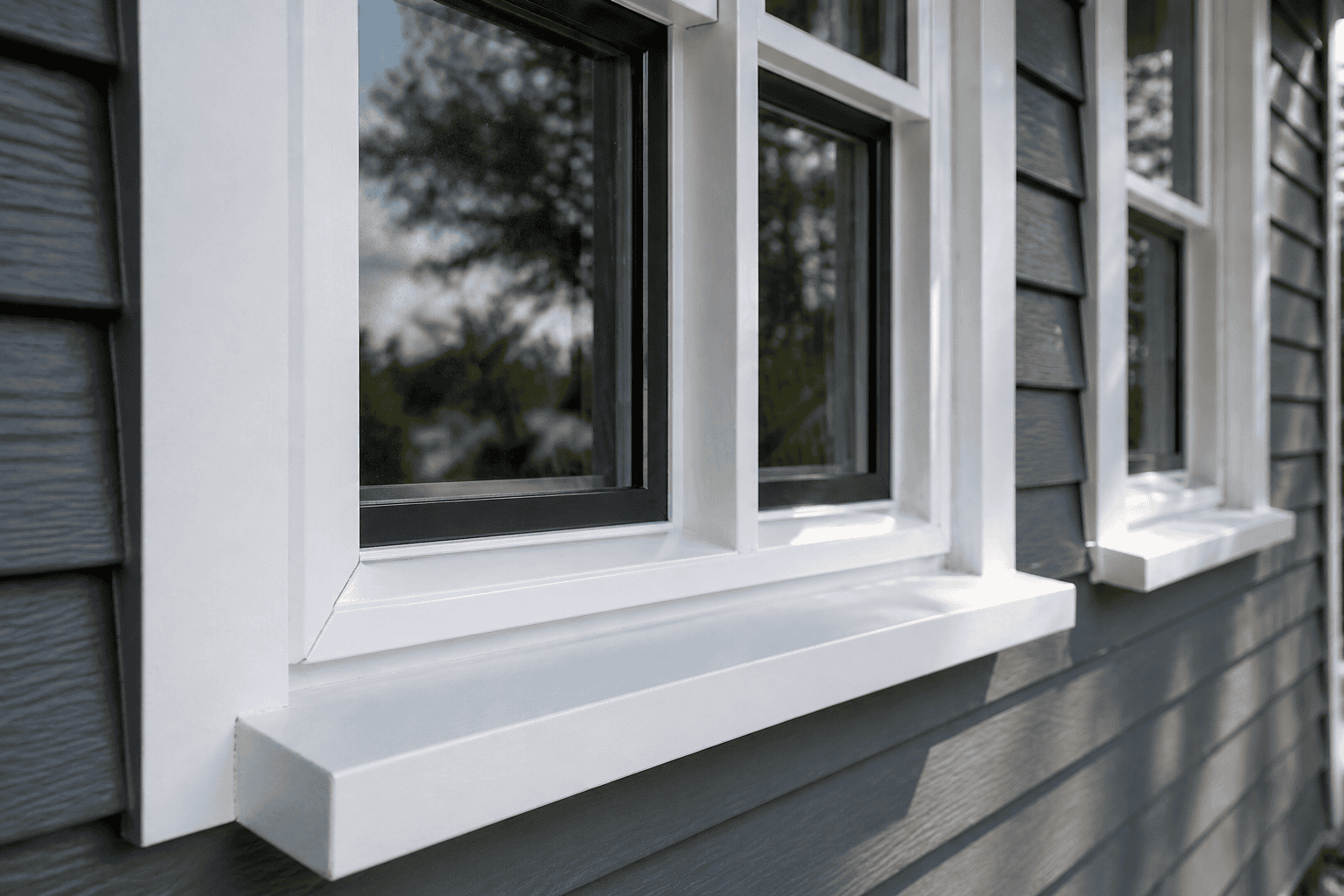
Window Installation Mistakes
A new window should make a home quieter, warmer, and more efficient. But when installation is rushed or done wrong, those same windows become drafty, leaky headaches.
Here’s the hard truth: Most window problems aren’t product failures—they’re installation failures.
If air or water can get around a window, it will. Let’s break down the common mistakes that cause trouble and how to avoid them.
- Improper Flashing (The #1 Leak Source)
Flashing directs water away from the window opening. When it’s missing, reversed, or poorly layered, rain gets behind the wall.
Common errors:
- No sill pan flashing
- Tape layered backward
- Poor integration with house wrap
- Gaps at corners
Water intrusion leads to rot, mold, and interior damage.
Correct approach: Layer materials “shingle-style” so water always drains outward.
- Poor Air Sealing Around the Frame
Even a high-efficiency window can leak air if gaps around the frame aren’t sealed.
Problems caused:
- Cold drafts
- Higher heating bills
- Uneven room temperatures
- Moisture condensation
Common shortcuts:
- Skipping insulation
- Using low-quality foam
- Leaving voids in corners
Correct approach: Use proper low-expansion foam and continuous air sealing.
- No Sill Pan Protection
The window sill is where water naturally collects. Without a sill pan, moisture seeps into framing.
What happens over time:
- Wood rot
- Mold growth
- Structural damage
- Costly tear-outs
Correct approach: Install rigid or flexible sill pan flashing to create a waterproof basin.
- Window Not Installed Level and Square
If a window isn’t perfectly aligned:
- Seals wear unevenly
- Locks don’t engage properly
- Air gaps form
- Water channels incorrectly
It may look fine at first—but performance suffers.
Correct approach: Precision shimming and fastening to maintain square alignment.
- Over-Driven Fasteners
Too much force bows the frame and breaks factory seals.
Results:
- Poor operation
- Seal failure
- Reduced lifespan
Correct approach: Follow manufacturer fastening patterns and torque guidance.
- Ignoring Drainage Paths
Windows are designed to shed incidental moisture. Blocking weep holes traps water.
What goes wrong:
- Frame deterioration
- Interior leaks
- Fogged glass units
Correct approach: Maintain clear drainage channels and proper bottom clearance.
- Skipping Manufacturer Guidelines
Every window system has specific installation requirements. Ignoring them risks:
- Voided warranties
- Performance failure
- Inspection issues
Quality products only perform when installed as designed.
- Interior Trim Sealed Too Early
Sealing interior trim before exterior waterproofing traps moisture inside the wall.
Result: Hidden damage that worsens over time.
Proper sequencing matters.
Signs Your Windows Were Installed Incorrectly
Watch for:
- Noticeable drafts
- Water stains below windows
- Condensation between panes
- Difficulty opening or closing
- Exterior caulking cracks
If you see one issue, don’t ignore it.
Why Professional Installation Matters
Windows are part of a full wall system. Proper installation ensures:
✔ Correct flashing integration ✔ Tight air sealing ✔ Waterproof sill protection ✔ Smooth operation ✔ Long-term efficiency
Craftsmanship turns good products into great performance.
🔗 Helpful Resources: Avoiding Window Installation Mistakes
If you want to better understand what causes drafts, leaks, and premature window failure, these resources break down the most common issues homeowners—and even some contractors—run into:
- Common Window Installation Mistakes (and How to Avoid Them)
A solid overview of where installs go wrong, including improper sealing, flashing errors, and poor measurements.
https://www.familyhandyman.com/project/installing-a-window - How Proper Flashing Prevents Water Leaks
Explains why flashing is one of the most critical (and most commonly skipped or done wrong) parts of window installation.
https://www.finehomebuilding.com/project-guides/windows-doors/installing-flashing-for-windows - Air Sealing and Insulation Around Windows
Learn how gaps, poor insulation, and improper foam application lead directly to drafts and energy loss.
https://www.energy.gov/energysaver/weatherize/air-sealing-your-home
Protect Your Home from Air and Water Intrusion
MCLC Contracting installs energy-efficient windows with clean, weather-tight workmanship built for Montana conditions.
Phone: 406-565-3999 Email: mclccontracting@gmail.com Website: www.mclccontracting.com
A tight window is a comfortable home.